
 NETWORK DYNAMICS GROUP



Busting the myth of “groupthink,” a powerful look at how our ability to influence one another can accelerate individual and collective intelligence.
In Goodthink, Damon Centola shows how to build teams, design online platforms, and create office spaces that sharpen our thinking individually and align our intelligence collectively. The secret, it turns out, is in the shape of our networks.

Race and gender bias in clinical practice is a persistent cause of healthcare disparities. This study investigates the potential of a peer network approach to reduce bias in medical treatment decisions within an experimental setting.

Errors in clinical decision-making are disturbingly common. In this study, we show that structured information–sharing networks among clinicians significantly reduce diagnostic errors, and improve treatment recommendations.

We investigate how social learning in structured information-sharing networks affects anchoring bias. Using a large-scale experiment, we show that networked groups can reduce the influence of harmful anchors while increasing the influence of helpful ones, leading to significant improvements in individual and collective accuracy through the dynamics of collective intelligence.
We examine the network dynamics that lead populations of individuals who initially disagree about which behaviors are virtuous to arrive at consistent, replicable consensus in their beliefs about virtuous behavior.
Check out op-eds by NDG members and current affairs features published in major media outlets.
This study addresses a 21st century problem that arises from the interaction between the history of institutional discrimination and racism in health, and the network dynamics of how a community’s structure affects the flow of novel health information about vaccination.

The online proliferation of false, hateful, and illegal content has required social media organizations to monitor and remove content that violates their community standards – a practice known as content moderation.

Despite decades of work on the network structures underlying social influence, standard measures of node centrality frequently misidentify the most influential nodes in a network.
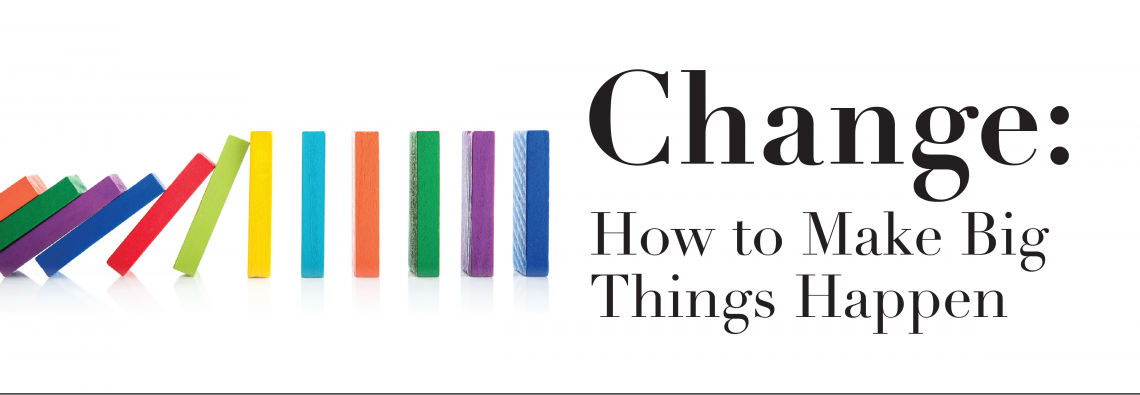
A paradigm-busting new theory about the complex way innovative ideas, movements, and behaviors spread from the edges of society to impact everyone, and how to use these ideas to effect the change you want to see in the world.
In How Behavior Spreads, Damon Centola presents over a decade of original research examining how changes in societal behavior–in voting, health, technology, and finance—occur and the ways social networks can be used to influence how they propagate.
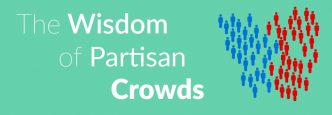
To test whether the wisdom of crowds is robust to partisan bias, we conducted two web-based experiments in which individuals answered factual questions known to elicit partisan bias before and after observing the estimates of peers in a politically homogeneous social network.

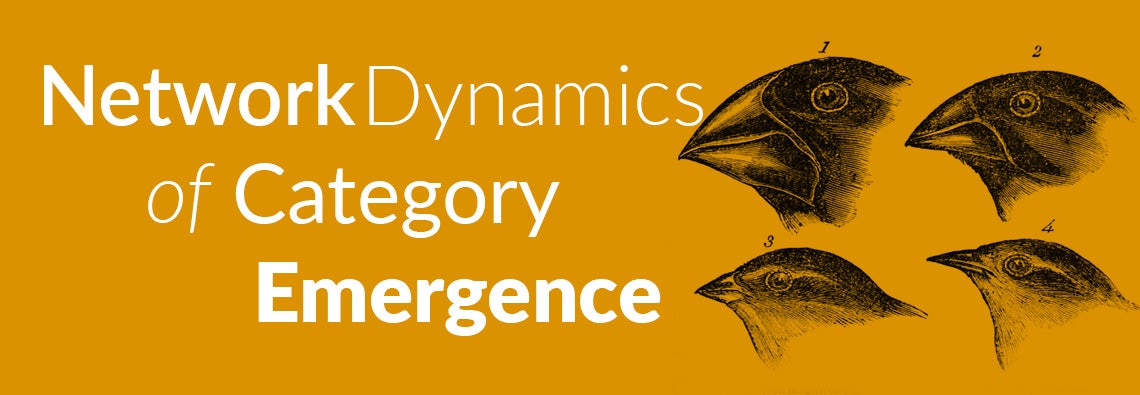
In this study, we use formal models and online experiments to see how categories emerge in social networks. Specifically, we develop novel theories and analyses to explain how categories emerge in social networks of various sizes and topologies.
This course condenses the last decade of cutting-edge research on these topics into six modules. Each module provides an in-depth look at a particular research puzzle -with a focus on agent-based models and network theories of social change.
In an online experiment, we use engineered social networks to harness peer influence among smokers and nonsmokers in such a way that counteracts and eliminates biased interpretations of warning labels.
In this study, we provide a method for facilitating cross-party communication that eliminates biased interpretations of climate data among conservatives, while also improving the interpretations of liberals.
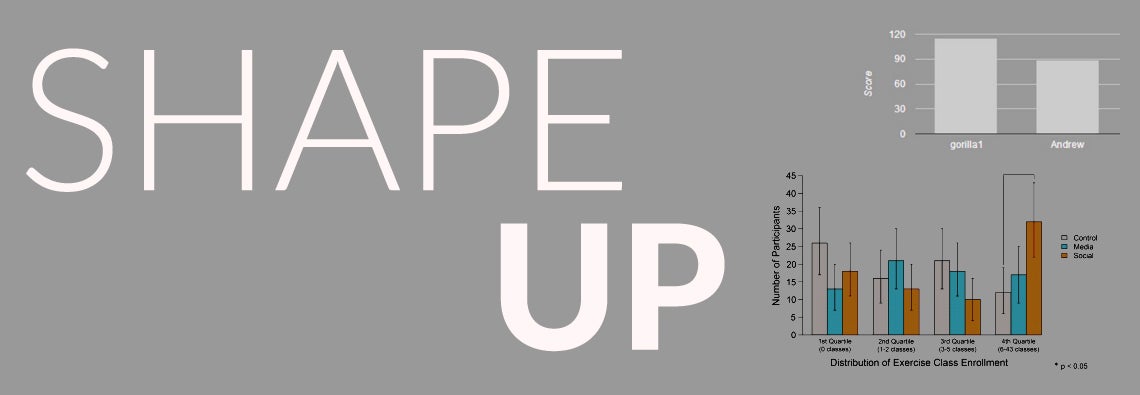
In a randomized controlled trial, we evaluate the effects of social support and social comparison independently, and in combination, to determine how social motivations for behavior change directly impact people’s exercise activity.
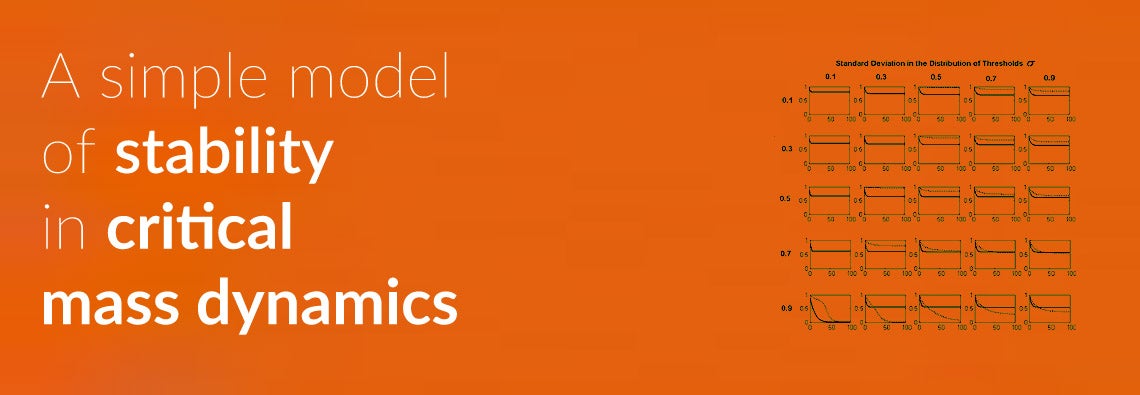
The “tipping point” is a common explanation for sudden shifts in collective behavior, but the limitations of historical evidence and conflicting theoretical models present a challenge to understanding how a small but committed group can change the behavior of an entire population.

This project seeks to understand the discussion of HPV vaccination and cervical cancer on social media. Cervical cancer causes 4,220 annual deaths. 17% women do not receive appropriate Pap smear screening.

Check here for the latest papers, publications and information about the Network Dynamics Group.

The authors demonstrate the uses of agent-based computational models in an application to a social enigma they call the “emperor’s dilemma,” based on the Hans Christian Andersen fable.

Studies of cultural differentiation have shown that social mechanisms that normally lead to cultural convergence—homophily and influence—can also explain how distinct cultural groups can form.

A class of inhomogenously wired networks called “scale-free” networks have been shown to be more robust against failure than more homogenously connected exponential networks.
How do online health networks evolve? A growing number of online health communities offer individuals the opportunity to receive information, advice, and support from their peers.
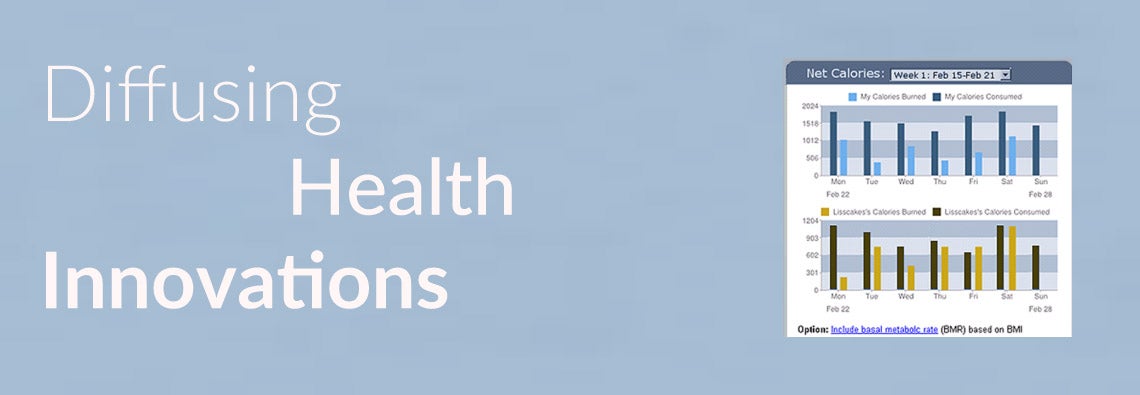
To understand how changes in people’s social “neighborhoods” affect the spread of health innovations, we developed an in vivo study that manipulated the level of “homophily”—similarity of social contacts—among the participants in an online fitness program.

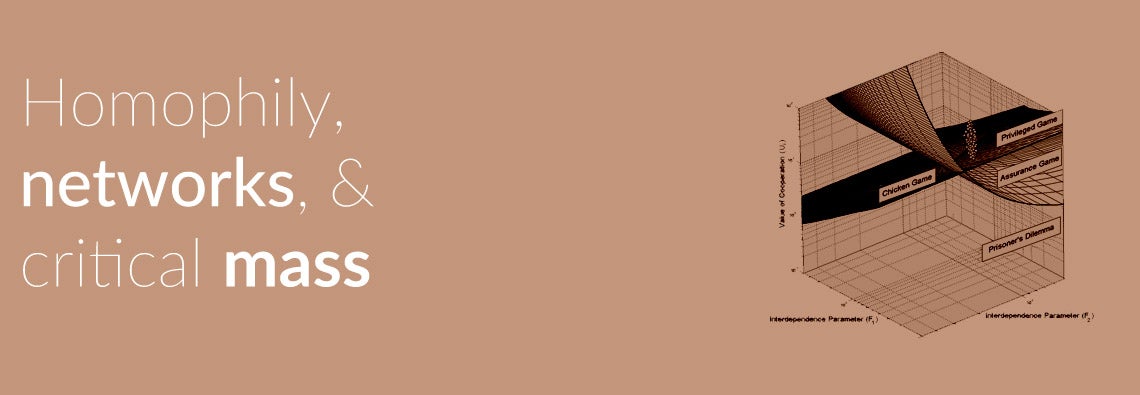
Formal theories of collective action face the problem that in large groups a single actor makes such a small impact on the collective good that cooperation is irrational.

In collective behaviors with strongly self-reinforcing dynamics, incentives to participate increase with the number of participants, such that incentives are highest when the full population has adopted the behavior.
How do norms emerge? In small groups, people have complete knowledge of one another’s behaviors, making it relatively easy to create shared expectations.
Do efficient communication networks increase collective intelligence? Scientists, engineers and strategists all work within highly connected environments where each person’s solutions are used to inspire and inform the work of others.